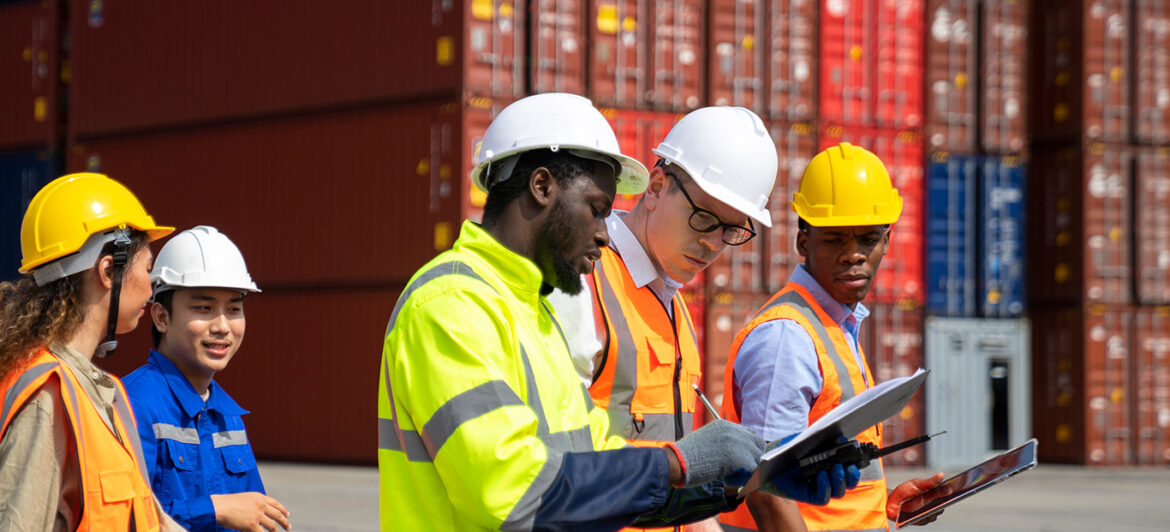
Today, we want to delve into a topic that, although often relegated to the background, is the true engine of any successful operation in Foreign Trade: people management. In a sector that deals with regulatory complexities, time zones, different cultures, and the relentless dynamics of the global market, the team is not just a resource; it is the most valuable asset.
Many talk about the importance of technology, artificial intelligence, and integrated logistics. And yes, all of that is vital. But those who operate these systems, who negotiate, who solve unforeseen problems, and who innovate are the people. Foreign trade is, by its nature, a complex and interconnected ecosystem, where qualified human capital is the difference between success and stagnation.
In this article, we will explore together the main challenges of people management in international trade, the most effective strategies for talent engagement and retention, and best practices for developing leadership in such a competitive and dynamic environment. Our goal is not only to educate, but to inspire you to look at your team through the lens of strategy and appreciation.
The Human resource management in foreign trade it goes far beyond the traditional HR department. It's a strategic approach that aims to attract, develop, engage, retain, and motivate professionals with the technical and behavioral skills necessary to navigate and thrive in the global landscape.
In international trade, this management is distinguished by several crucial factors:
In short, people management in foreign trade is not just about "managing," but about cultivating an environment that allows these complex professionals to flourish and deliver excellent results.
Investing strategically in talent management in foreign trade is not a cost, it's an investment with exponential returns. The benefits are clear and tangible:
Despite the clear benefits, people management in foreign trade faces systemic and complex challenges that require multifaceted and proactive approaches.
One of the most pressing dilemmas today is the shortage of qualified talent. The international trade market demands a unique combination of technical proficiency and soft skills, making the identification and acquisition of these professionals a real strategic bottleneck for many organizations. It is not enough to have knowledge of customs legislation or Incoterms; Professionals need to demonstrate resilience to handle pressure, proactivity to anticipate problems, adaptability to constant change, and keen cultural intelligence to navigate global environments. The rarity of this hybrid profile intensifies competition for talent and raises recruitment costs, forcing companies to invest more in internal development and innovative attraction strategies.
The foreign trade sector is inherently dynamic, and this characteristic, combined with the high demand for experienced professionals, often results in high turnover. Companies engage in constant "hunting" strategies to poach talent from competitors, seeking already established expertise. This dynamic generates significant costs related to recruitment, selection, and training of new employees, in addition to the invaluable loss of institutional know-how and relationships built over time. Maintaining a stable and cohesive team, capable of ensuring the continuity of operations and the quality of service, becomes a continuous struggle, requiring more robust and personalized retention programs.
Globalization and, more recently, the acceleration of remote work driven by the pandemic, have consolidated the trend of globally distributed and multicultural teams. This configuration, while bringing the richness of diversity, adds complex layers to people management. Dealing with different time zones, cultural nuances in communication, distinct expectations about hierarchy and feedback, and maintaining the cohesion of a team that does not always share the same physical space, is a daily challenge for leadership. Building a sense of belonging and promoting an inclusive culture become essential to mitigate the risks of isolation and disengagement.
The critical nature of Foreign Trade operations, characterized by tight deadlines, responsibility for significant volumes and values of goods, and the need for continuous management of unforeseen events (such as unexpected logistical delays, complex customs problems, abrupt exchange rate fluctuations, or geopolitical crises affecting routes), generates a high-pressure environment and, consequently, high stress. The mental health and well-being of employees thus become a strategic imperative. The implementation of psychosocial support programs, flexibility to manage work-life balance, and a culture that destigmatizes stress are fundamental to avoiding burnout and maintaining long-term productivity.
The transition from technically skilled professionals to effective leaders who inspire, delegate, and develop their teams is a significant challenge in international trade. Often, career paths prioritize technical expertise and operational execution. However, an effective leader in international trade needs to go beyond technical knowledge, mastering skills in people management, conflict resolution, decision-making under pressure, and fostering a collaborative environment. Leadership competency development is therefore a crucial investment, requiring specific programs that prepare these professionals for the challenges of managing people in such a unique context.
Trade regulations, technological innovations (such as Artificial Intelligence and Blockchain in the supply chain) and best market practices are evolving at an exponential rate. This dynamic imposes a continuous and accelerated cycle of learning and professional retraining. Keeping the team up-to-date and ensuring that the organization's know-how is at the forefront of the sector is a constant challenge, requiring significant investment in continuing education, access to new tools, and a culture of lifelong learning. Outdated knowledge can lead to loss of competitiveness and operational inefficiency.
Given the aforementioned challenges, we have identified and recommend the following strategies and best practices for human capital management in foreign trade, aiming to optimize performance and sustainability:
Intelligent attraction and recruitment must go beyond traditional resume analysis. It is essential to define an ideal profile that encompasses not only technical proficiency, but also resilience, proactivity, adaptability, and cultural intelligence.
Continuous development is an irreplaceable pillar. In a constantly evolving sector, learning never stops.
A strong and resilient organizational culture is the foundation for keeping the team engaged and motivated, especially in a high-pressure environment.
Talent retention is just as important as attraction. Investing in leaders capable of inspiring and developing their teams is vital for sustainable growth.
Looking to the horizon, the landscape of human resource management in foreign trade appears even more fascinating and, why not say, challenging. Technological evolution and new market dynamics promise to redefine the role of the foreign trade professional, requiring continuous and strategic adaptation.
The integration between human capital and emerging technologies, such as Artificial Intelligence (AI) and Machine Learning, will become even more profound. AI will take on the burden of repetitive tasks and the analysis of large volumes of data (Big Data), freeing up foreign trade professionals for higher value-added activities – strategic, creative, relational, and complex problem-solving. We foresee the rise of “AI partners” who will act as intelligent assistants, providing predictive insights and optimizing processes, but always under human supervision and interpretation. The challenge will be to train professionals to collaborate effectively with these technologies.
With the automation of operational and analytical tasks, the demand for non-cognitive skills – the so-called soft skills – will increase exponentially. Critical thinking, emotional intelligence, creativity, collaboration, intercultural communication, adaptability, and complex problem-solving will become the main focus of talent development. These are intrinsically human competencies, inimitable by automation and crucial for navigating a complex and constantly changing global environment.
With increased operational pressure, market volatility, and the complexity of the digital environment, the mental well-being of employees will solidify as a non-negotiable organizational priority. Companies that neglect the mental health and work-life balance of their teams will face higher rates of burnout, turnover and a drop in productivity. Support programs, flexibility, and a culture that fosters a healthy environment will be essential for the sustainability of high performance.
The search for talent will transcend geographical and cultural barriers even more sharply. The ability to attract, integrate, and manage diverse teams – in terms of ethnicity, gender, background, experience, and culture – will cease to be merely an ethical guideline and become a strategic competitive advantage. Managing diversity and inclusion enhances innovation, adaptability, and the ability to solve complex problems, bringing a wider range of perspectives and solutions to the global challenges of international trade.
Our vision at Grupo Flipper is that the future of Foreign Trade will, paradoxically, be even more human. With AI taking over the operational burden and repetitive tasks, we will have more bandwidth to dedicate to what really matters: connecting people, building lasting relationships, and innovating collaboratively. The future of Foreign Trade is human-centered, with technology as an ally.
In foreign trade, human resource management is not merely an operational appendix, but the beating and irreplaceable heart of your operation. Ignoring this aspect risks efficiency, inhibits innovation, and ultimately undermines the sustainability of your business in an increasingly competitive global landscape.
Proactively investing in attracting, developing, and retaining qualified talent represents the most crucial strategic decision an organization can make today. These are the individuals who, on a daily basis, face complex global challenges, ensure regulatory compliance, and drive products across world borders. Without them, technology is stagnant, and logistics are static.
We at Grupo Flipper deeply understand this dynamic. We firmly believe that excellence in logistics and international trade is intrinsically linked to human excellence. For this reason, we are continuously dedicated to implementing best practices in people management and fostering strategic partnerships to strengthen our team. Consequently, we raise the quality and innovation of the solutions we deliver to you, ensuring that your supply chain is not only efficient, but also sustainable and resilient, driven by the best human capital in the sector.
As a leading Logistics Operator in integrated solutions for Foreign Trade, Grupo Flipper understands the complexity of each stage of the logistics process, from national and international collection to customs clearance. Our innovative solutions and expertise ensure that your cargo reaches its destination with maximum efficiency and full compliance.
Don't waste time with the bureaucracy of the past. Optimize your customs processes and gain a competitive advantage.
Contact Grupo Flipper today and discover how our technology and experience can simplify your international trade!
Developed by Unielo Comunicação.